
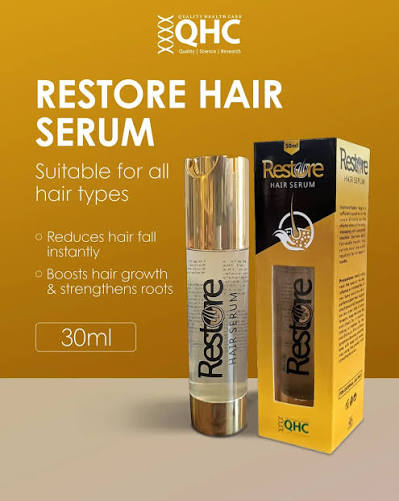
Finding the best hair growth serum is not simply about choosing the product with the biggest claims. Hair fall, thinning, breakage, and weak-looking hair can have different causes, so the right serum should match your scalp condition, hair concerns, and daily routine. QHC, which stands for Quality Health Care, offers hair care products designed to support everyday scalp and hair care needs.
What Is a Hair Growth Serum?
A hair growth serum is a leave-on product designed to be applied to the scalp or hair roots. Depending on its formulation, it may contain ingredients intended to support the scalp environment, improve the appearance of thinning areas, or help hair look healthier and stronger.
Unlike regular hair oils, scalp serums are usually created for more targeted application. Their lightweight texture can make them convenient for people who want to add a focused treatment to their routine.
However, not every serum works in the same way. Ingredients, formulation, application method, and consistency all matter when choosing a product.
What Should You Look for in a Hair Growth Serum?
Before choosing a serum, look at its ingredients and consider your main hair concern.
Peptides
Peptides are commonly used in modern hair and scalp formulations. They may be included in products designed to support healthier-looking hair and scalp care.
Caffeine
Caffeine is another ingredient found in some scalp-focused hair products. It is commonly used in formulations created for thinning and weak-looking hair.
Niacinamide
Niacinamide is widely used in skincare and scalp-care products. It can support the skin barrier and may be included in formulas designed for maintaining a healthy scalp environment.
Botanical Ingredients
Some hair serums contain botanical extracts and plant-derived ingredients. These can provide additional formulation benefits depending on the product.
Remember that natural ingredients can still cause sensitivity in some people, so always consider your individual scalp needs.
Hair Growth Serum vs Hair Oil
Hair serum and hair oil serve different purposes.
Hair oils are generally used to condition the hair, reduce dryness, and improve softness. A scalp serum is usually designed for more targeted application and may have a lighter texture.
If your main concern is dry hair lengths, an oil may be useful. If your focus is scalp care and thinning-looking areas, a dedicated scalp serum may fit your routine better.
Some people may use both, but applying too many products can lead to buildup, especially on an oily scalp.
How to Choose a Serum for Your Hair Concern
Your main hair concern should guide your product choice.
For Hair Thinning
If your hair appears thinner than before, look for a serum specifically formulated for scalp and hair-density concerns.
Consistent application is important, but remember that persistent thinning can have many causes and may require professional evaluation.
For Hair Breakage
Hair breakage is different from hair loss at the root. Heat styling, chemical treatments, dryness, and tight hairstyles can all contribute to breakage.
Along with using a suitable serum, focus on gentle handling and regular conditioning.
For Dry or Uncomfortable Scalp
A dry or uncomfortable scalp may benefit from a simple routine with gentle cleansing and appropriate hydration.
Avoid using several strong active products at the same time if your scalp is already irritated.
For Weak-Looking Hair
If your hair feels weak or fragile, reduce unnecessary heat and chemical treatments. A gentle hair-care routine can help minimize avoidable damage.
How to Apply Hair Growth Serum Correctly
Using a serum correctly can make your routine easier to maintain.
Follow these basic steps:
- Start with a clean scalp unless the product instructions say otherwise.
- Divide your hair into small sections.
- Apply the recommended amount directly to the scalp.
- Gently massage the serum into the scalp.
- Leave it on according to the product instructions.
- Wash your hands after application.
- Use the product consistently as directed.
Avoid applying excessive amounts. More product does not necessarily mean better results.
How Often Should You Use a Hair Serum?
The recommended frequency depends on the individual product.
Some serums are designed for daily use, while others may be recommended several times a week. Always follow the directions on the product packaging.
Consistency is more useful than applying a large amount occasionally.
Hair-related changes also take time, so avoid judging a product after only a few applications.
Can a Hair Serum Stop Hair Fall?
A hair serum may support the appearance and condition of hair, but it cannot address every possible cause of hair fall.
Stress, nutritional deficiencies, hormonal changes, genetics, scalp conditions, certain medications, and other factors can contribute to hair loss.
If hair loss is sudden, severe, or persistent, consider speaking with a dermatologist or qualified healthcare professional to identify the possible cause.
A cosmetic hair serum should not be considered a replacement for medical evaluation.
How QHC Fits Into a Hair Care Routine
QHC, or Quality Health Care, focuses on skincare and hair-care products designed for everyday beauty and personal-care needs.
When choosing a QHC hair serum or any other hair-care product, consider your scalp type, hair concern, ingredients, texture, and application instructions.
A simple routine can be easier to follow consistently. Instead of using several products at once, start with the essentials and add other products only when needed.
Common Mistakes When Using Hair Serums
Applying Too Much Product
Using more serum than recommended can make the scalp feel greasy and may contribute to product buildup.
Using It Only Occasionally
Applying a serum only once in a while makes it difficult to maintain a consistent routine or assess how your hair responds.
Mixing Too Many Scalp Products
Using multiple active scalp products together may increase the possibility of irritation. Introduce new products gradually.
Ignoring Scalp Health
Healthy-looking hair starts with appropriate scalp care. Regular cleansing and avoiding unnecessary irritation are important.
Expecting Overnight Growth
Hair does not change overnight. Give your routine enough time and focus on consistent use rather than expecting immediate results.
Hair Care Habits That Support Your Routine
A serum works best as part of an overall hair-care routine.
Try to:
- Avoid very tight hairstyles.
- Reduce excessive heat styling.
- Use a shampoo suited to your scalp.
- Condition the hair lengths regularly.
- Avoid aggressive brushing.
- Limit unnecessary chemical treatments.
- Maintain a balanced diet.
- Keep your scalp clean and comfortable.
These habits can help reduce avoidable damage and support healthier-looking hair.
When Should You See a Dermatologist?
Not every hair concern should be managed with cosmetic products alone.
Consider professional advice if you notice sudden hair loss, rapidly increasing thinning, bald patches, persistent scalp itching, redness, scaling, or other unusual changes.
A dermatologist can examine the scalp and hair and determine whether further treatment or testing may be appropriate.
How to Add a Hair Serum to Your Routine
A simple routine is usually easier to maintain.
Start with a shampoo that suits your scalp and use conditioner on the hair lengths when needed. After cleansing, apply your selected serum according to its instructions.
Avoid introducing several new products at the same time. Adding one product at a time makes it easier to understand how your scalp responds.
Choosing a Hair Serum for Long-Term Care
The right serum should fit your specific hair concern, scalp type, lifestyle, and routine.
Instead of choosing a product only because it is popular, check the ingredient list, intended use, texture, and application instructions.
A lightweight formula may be more comfortable for an oily scalp, while someone with a dry or sensitive scalp may prefer a gentler formulation.
Hair growth and hair loss can be influenced by many different factors. A serum can be one part of a broader hair-care routine, but it cannot address every possible cause of hair loss.
A Consistent Routine Can Support Healthier-Looking Hair
Healthy-looking hair usually requires patience and regular care. Choose products according to your scalp and hair needs, apply them correctly, and avoid constantly changing your routine.
QHC can be included as part of a simple hair-care routine when a product matches your individual needs and preferences.
Along with a suitable serum, gentle cleansing, good scalp hygiene, reduced hair damage, and healthy everyday habits can all contribute to better-looking hair.
Frequently Asked Questions
Can Hair Growth Serum Be Used Every Day?
Some serums are designed for daily use, while others have different instructions. Always follow the directions provided with your specific product.
How Long Does Hair Serum Take to Show Results?
Results vary depending on the product, hair concern, and individual. Hair-related changes generally require consistent use over time rather than immediate results.
Can Hair Serum Be Used on an Oily Scalp?
Yes. A lightweight, non-greasy formulation may be more comfortable for an oily scalp. Avoid using more product than recommended.
Should Hair Serum Be Applied to Wet or Dry Hair?
It depends on the product. Some serums are designed for application to a clean, dry scalp, while others may have different instructions. Follow the product label.
Can Hair Serum Help With Hair Breakage?
Some products can help improve the condition and appearance of the hair, but breakage can also result from heat styling, chemical treatments, dryness, and mechanical damage.
Can I Use Hair Oil and Hair Serum Together?
They can sometimes be used together, but layering too many products may cause buildup. Keep your routine simple and follow the instructions for each product.
Is Hair Serum Suitable for Everyone?
Not necessarily. Different scalps can respond differently to ingredients. If you have a sensitive or irritated scalp, consider patch testing and professional advice when appropriate.