
What Actually Works for Your Skin Type
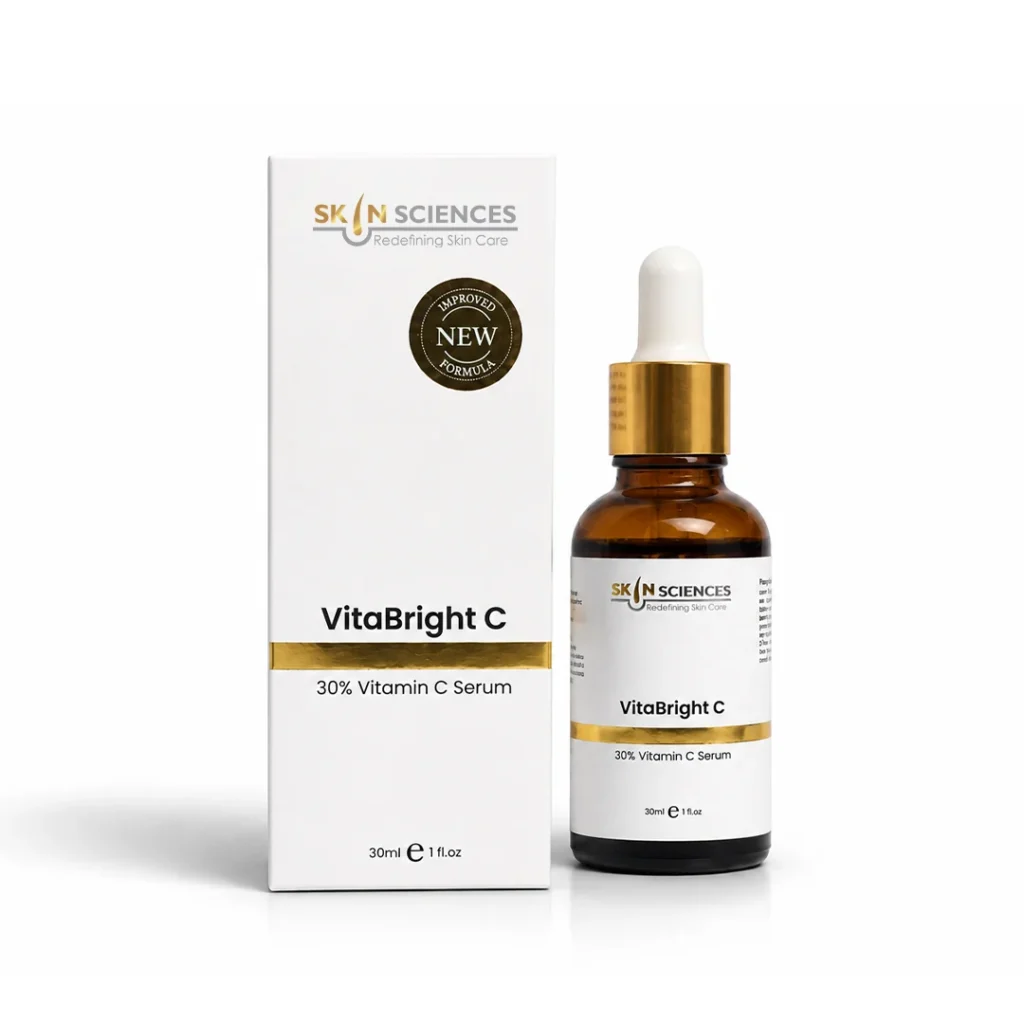
The best vitamin C serum for face should provide a well-formulated vitamin C source, appropriate concentration, good stability, and a texture your skin can tolerate consistently. Skin Sciences Vitamin C Serum contains ascorbic acid alongside niacinamide, sodium hyaluronate, glycerin and other supporting ingredients, making it an option for people seeking brighter, smoother-looking and more hydrated skin.
Key Takeaways
- L-ascorbic acid is the most studied topical form of vitamin C, but it is also relatively unstable and formulation-dependent.
- Research commonly supports topical vitamin C formulations in the 10–20% range, although concentration alone does not determine product quality.
- Skin Sciences Vitamin C Serum currently lists ascorbic acid, niacinamide, sodium hyaluronate, glycerine and propanediol among its ingredients.
- Vitamin C can support the appearance of uneven tone, pigmentation, dullness and photoaging, but it is not a substitute for sunscreen or medical treatment.
- Sensitive skin may need a slower introduction because acidic vitamin C formulations can cause dryness, stinging or irritation.
- Consistency matters more than choosing the highest possible concentration.
What Makes the Best Vitamin C Serum for Face?
The best vitamin C serum is not simply the one with the highest percentage on the label. The form of vitamin C, formulation stability, concentration, pH, packaging and your skin’s tolerance all matter.
1. The form of vitamin C
Vitamin C can appear in skincare under several names.
The most extensively studied form is L-ascorbic acid, also called ascorbic acid or pure vitamin C. It has been investigated for antioxidant protection, pigmentation, photoaging and collagen-related skin changes.
Other derivatives include:
- Magnesium ascorbyl phosphate
- Sodium ascorbyl phosphate
- Ascorbyl glucoside
- Tetrahexyldecyl ascorbate
- Ascorbyl tetraisopalmitate
These derivatives can offer advantages in stability or tolerability, but they should not automatically be considered equivalent to L-ascorbic acid. Their conversion, penetration and clinical evidence differ.
2. Concentration
For L-ascorbic acid, dermatology literature commonly discusses concentrations around 10–20%. Earlier research suggests that increasing concentration beyond approximately 20% does not necessarily provide additional biological benefit and may increase irritation.
That means “more vitamin C” is not automatically “better skincare.”
A 10% formulation that remains stable and is used consistently may be more practical for some people than a very high-strength product that causes irritation.
3. pH matters
L-ascorbic acid is highly formulation-dependent. Research has found that a low-pH environment, generally below approximately 3.5, can improve penetration of the uncharged form through the skin barrier.
However, lower pH can also increase the possibility of stinging or irritation, especially for sensitive skin.
Therefore, consumers should not judge a vitamin C serum by concentration alone.
4. Stability is critical
Vitamin C is vulnerable to oxidation caused by oxygen, light and heat. Oxidized vitamin C may become less useful as an active ingredient and can change the appearance of a serum.
A good formulation therefore needs appropriate stability considerations, packaging and storage.
5. Packaging
Opaque, light-protective and well-sealed packaging can help limit environmental exposure.
For any vitamin C product, check:
- Is the container exposed to direct sunlight?
- Is it tightly sealed after use?
- Does the product change substantially in color, smell or texture?
- Are storage instructions provided?
The current Skin Sciences product page provides ingredient and usage information, but does not publicly specify the exact pH, vitamin C percentage, packaging technology or shelf-life details. Those specifications should be confirmed from the product packaging or manufacturer before making precise claims about them.
How Skin Sciences Formulated Its Vitamin C Serum
Skin Sciences positions its Vitamin C Serum around brightening, hydration and improving the appearance of uneven skin tone. Its current product listing identifies ascorbic acid as an ingredient and also includes niacinamide, sodium hyaluronate, glycerine, propanediol and other supporting ingredients.
The ingredient list is particularly interesting because the formula does not rely on vitamin C alone.
Ascorbic acid
Ascorbic acid provides the vitamin C component. Topical vitamin C has antioxidant properties and has been studied for its role in reducing oxidative stress, supporting collagen-related processes and improving the appearance of pigmentation and photoaged skin.
Niacinamide
Niacinamide, or vitamin B3, is another widely used skincare ingredient associated with barrier support and improvements in uneven tone.
Combining vitamin C with niacinamide can make sense from a routine-design perspective, provided the finished formula is well tolerated.
Sodium hyaluronate
Sodium hyaluronate is a form of hyaluronic acid used to support hydration.
This is useful because a brightening serum does not need to leave the skin feeling stripped or excessively dry.
Glycerine
Glycerine is a humectant that helps attract and retain water at the skin surface.
The presence of humectants can make a serum more comfortable, particularly when a person is introducing an active ingredient into their routine.
What the available evidence does and does not tell us
There is good scientific evidence supporting topical vitamin C generally, but evidence for one specific commercial product cannot automatically be transferred from studies on different formulas.
This distinction is important for E-E-A-T and YMYL skincare content.
For example, a clinical study involving 15% L-ascorbic acid plus other antioxidants is evidence about that tested formulation—not automatically evidence that every product containing ascorbic acid will produce the same results.
How We Tested
Editorial testing framework
A genuine 8-week product test should only be published as a “real testing” claim when the brand or editorial team has actually completed and documented that testing.
For transparency, the publicly available Skin Sciences product information does not provide an independently verifiable 8-week consumer-testing dataset, so specific statements such as “92% of users saw brighter skin after eight weeks” should not be added without internal evidence.
A proper eight-week assessment could include:
Testing duration: 8 weeks
Skin types:
- Oily
- Dry
- Combination
- Normal
- Sensitive
Testing observations:
- Initial texture
- Spreadability
- Absorption time
- Residue
- Layering under moisturizer
- Compatibility with sunscreen
- Skin comfort
- Changes in visible dullness
- Changes in the appearance of uneven tone
- Occurrence of redness or stinging
- Changes in dryness or tightness
What testers should record
At baseline, testers should photograph their skin under consistent lighting.
Follow-up photographs should be taken around:
- Week 2
- Week 4
- Week 6
- Week 8
User feedback should distinguish between subjective experience and measurable changes.
For example:
“The serum felt lightweight and absorbed quickly.”
is an experience statement.
By contrast:
“The serum removed 80% of pigmentation.”
is a quantitative efficacy claim and would require appropriate evidence.
This distinction helps prevent exaggerated skincare marketing.
Best Vitamin C Serum by Skin Type
There is no single vitamin C formulation that is perfect for every face. The best choice depends on your skin type, tolerance and the rest of your skincare routine.
| Skin Type | Formula Considerations | What to Look For |
| Oily | Lightweight, non-heavy texture | Antioxidant serum with comfortable finish |
| Dry | Vitamin C + humectants | Glycerine, hyaluronic acid/sodium hyaluronate |
| Sensitive | Lower irritation potential | Gradual introduction and potentially gentler derivatives |
| Combination | Lightweight hydration | Balanced antioxidant + hydrating formula |
| Mature | Antioxidant + anti-aging routine | Vitamin C, sunscreen and proven nighttime actives |
Vitamin C Serum for Oily Skin
If you have oily skin, a serum that feels lightweight and layers comfortably under sunscreen is usually easier to use consistently.
Skin Sciences’ current product instructions specifically suggest using a thin layer for oily skin.
Vitamin C can fit well into an oily-skin routine because the goal is not to dry the skin aggressively. Over-cleansing and excessive exfoliation can make the routine harder to tolerate.
Vitamin C Serum for Dry Skin
Dry skin may benefit from combining antioxidant care with hydration.
The Skin Sciences formula lists sodium hyaluronate and glycerine, both commonly used for hydration.
If your skin feels tight after applying vitamin C, use a moisturizer afterward rather than increasing the amount of serum.
Vitamin C Serum for Sensitive Skin
Sensitive skin requires more caution.
L-ascorbic acid formulations can sting because of their acidity, and dermatology reviews note that higher concentrations may cause irritation, redness, itching or dryness in some sensitive individuals.
Start slowly:
- Apply a small amount.
- Use it every other morning initially.
- Follow with moisturizer.
- Use sunscreen during the day.
- Stop if significant irritation develops.
A gentler vitamin C derivative may also be worth discussing with a dermatologist if pure ascorbic acid is difficult to tolerate.
Combination Skin
Combination skin often benefits from a lightweight serum followed by targeted moisturizing.
You can apply a thin layer across the face and use a slightly richer moisturizer only on areas that feel dry.
Mature Skin
For mature skin, vitamin C can be one component of a broader routine.
Research supports topical vitamin C’s antioxidant and collagen-related roles, but sunscreen remains essential for protecting against ongoing UV exposure.
A practical routine can include:
Morning:
Cleanser → Vitamin C → Moisturizer → Sunscreen
Evening:
Cleanser → Retinoid/other suitable active → Moisturizer
How to Use Vitamin C Serum Correctly
The simplest answer to how to use vitamin C serum is: apply it after cleansing and before moisturizer, then use sunscreen during the daytime.
Cleanse
Use a gentle cleanser and pat your skin dry.
You do not need to scrub aggressively before applying vitamin C.
Apply vitamin C
Use a small amount according to the manufacturer’s directions.
Skin Sciences currently recommends applying a small amount to clean, dry skin in the morning or evening and allowing it to absorb before moisturizer.
Moisturize
Once the serum has absorbed, apply your moisturizer.
This answers the common question:
Vitamin C Serum Before or After Moisturizer?
Vitamin C serum generally goes before moisturizer.
The usual order is:
Cleanser → Vitamin C serum → Moisturizer → Sunscreen
There can be exceptions depending on the formula and individual skin sensitivity, but this sequence works well for many routines.
Sunscreen in the morning
Vitamin C should not replace sunscreen.
A broad-spectrum sunscreen is still the primary protective step in a daytime skincare routine.
How often should you use vitamin C?
If your skin tolerates it, daily use may be reasonable.
If you’re new to vitamin C or have sensitive skin, start every other day and gradually increase frequency.
Vitamin C Serum vs. Other Brightening Ingredients
Vitamin C is only one option for improving the appearance of uneven tone.
| Ingredient | Main Role | Best Used For |
| Vitamin C | Antioxidant + brightening support | Dullness, uneven tone, photoaging |
| Niacinamide | Barrier and tone support | Uneven tone, oil-prone skin |
| Retinol | Cell turnover and anti-aging | Fine lines, texture, acne-related concerns |
| Alpha Arbutin | Pigment-focused brightening | Appearance of dark spots |
Vitamin C vs Niacinamide
These ingredients are not necessarily competitors.
A formula containing both may provide complementary benefits, provided the skin tolerates it.
Niacinamide is particularly useful when barrier support and oil balance are priorities.
Vitamin C vs Retinol
Vitamin C is commonly used in morning routines because of its antioxidant properties.
Retinoids are more commonly incorporated into nighttime routines.
They target overlapping concerns but work through different mechanisms.
A 2026 randomized trial comparing 15% topical L-ascorbic acid with 0.1% retinol reported improvements in both groups over the study period, although the study was limited in duration and population.
That does not mean vitamin C and retinol are interchangeable for every skincare concern.
Vitamin C vs Alpha Arbutin
Alpha arbutin is commonly selected for routines focused specifically on the appearance of hyperpigmentation.
Vitamin C offers an additional antioxidant role.
For people building a skincare routine for hyperpigmentation, the most important principle is to avoid stacking too many aggressive activities at once.
What Does Vitamin C Actually Do for the Skin?
Vitamin C acts as an antioxidant and has several mechanisms relevant to cosmetic dermatology.
Antioxidant protection
Free radicals and oxidative stress are associated with environmental skin damage.
Topical vitamin C can help neutralize reactive species and support the skin’s antioxidant defenses.
Collagen synthesis
Vitamin C participates in processes involved in collagen formation.
Clinical and laboratory research has therefore investigated topical vitamin C for visible signs of photoaging, including fine lines and changes in skin firmness.
Uneven pigmentation
Vitamin C may also influence melanin production pathways.
Clinical research has reported improvements in pigmentation with topical L-ascorbic-acid formulations, although outcomes vary between products and study designs.
Skin radiance
A brighter-looking complexion can result from improvements in uneven tone, surface appearance and hydration.
However, “glowing skin” should not be interpreted as a medical outcome.
Real Results: What Skin Sciences Users Experienced
Skin Sciences describes its Vitamin C Serum as supporting brighter, firmer and smoother-looking skin and reports that customers appreciate its glow and clarity benefits.
However, these statements should be understood as brand-reported customer experience, not as independently controlled clinical evidence.
The current product page does not provide:
- A published randomized controlled trial of the exact Skin Sciences formula
- An independently verified 8-week consumer panel
- Instrumental pigmentation measurements
- A published before-and-after methodology
- A quantified percentage of users achieving a particular result
For an E-E-A-T-focused article, this distinction is important.
What realistic results may look like
With consistent use, users may notice:
Earlier:
- Better hydration
- A fresher appearance
- Improved surface softness
Several weeks:
- More even-looking tone
- Reduced appearance of dullness
- Gradual improvement in overall radiance
Longer term:
- Continued antioxidant support
- Potential improvements in the appearance of photoaging when used alongside sun protection
Results vary according to pigmentation type, sun exposure, skin sensitivity, formulation stability and consistency.
Who Should Not Expect Vitamin C to Do Everything?
Vitamin C is useful, but it is not a universal treatment.
It is not ideal to rely on vitamin C alone if you have:
- Persistent or worsening melasma
- Severe acne
- Significant inflammatory skin disease
- Sudden changes in pigmentation
- A suspected allergic reaction
- Persistent burning or dermatitis
Those concerns may require assessment by a qualified dermatologist.
Vitamin C can be part of cosmetic skincare, but it should not be marketed as a cure for dermatological disease.
Frequently Asked Questions
1. What is the best vitamin C serum for the face?
The best vitamin C serum depends on the form of vitamin C, concentration, stability, packaging, formulation quality and your skin’s tolerance. Skin Sciences Vitamin C Serum contains ascorbic acid alongside niacinamide and hydrating ingredients including sodium hyaluronate and glycerine.
2. Is vitamin C serum good for dark spots?
Vitamin C can help improve the appearance of uneven pigmentation and dark spots as part of a consistent skincare routine. Clinical research has investigated L-ascorbic acid for pigmentation, although results vary between formulations.
3. Can I use vitamin C serum every day?
Many people can use vitamin C daily if their skin tolerates it. Beginners or people with sensitive skin should introduce it gradually and reduce frequency if irritation occurs.
4. Should I use vitamin C before or after moisturizer?
Vitamin C serum generally goes before moisturizer. A common morning sequence is cleanser → vitamin C serum → moisturizer → sunscreen.
5. Can I use vitamin C serum for sensitive skin?
Yes, but sensitive skin may require a slower introduction. L-ascorbic acid’s acidity can cause stinging, dryness or redness in some people, particularly at higher concentrations.
6. Can vitamin C replace sunscreen?
No. Vitamin C provides antioxidant support but does not replace broad-spectrum sunscreen.
7. When should I expect results from vitamin C serum?
Hydration and surface-feel changes may be noticed relatively quickly, while improvements in uneven tone and visible photoaging generally require consistent use over several weeks or longer. Individual results vary.
Important Product Transparency: What We Could Verify
For trustworthy skincare content, every product claim should be traceable.
The current Skin Sciences product listing verifies:
- Vitamin C ingredient: Ascorbic acid
- Additional ingredients: Niacinamide, sodium hyaluronate, glycerine, propanediol and others
- Directions: Apply a small amount to clean, dry skin
- Routine placement: Allow serum to absorb before moisturizer
- Skin-type guidance: Thin layer for oily skin; slightly more for dry skin if comfortable
- Daytime advice: Pair with regular sunscreen
- Usage caution: Avoid combining with strong exfoliants on the same day according to the product instructions.
The publicly available page does not establish an exact percentage of ascorbic acid, pH, airless/opaque packaging technology, shelf life, independent third-party testing, certifications, or a named board-certified dermatologist reviewer. Those details should be added only after confirmation from Skin Sciences documentation.
This kind of disclosure strengthens rather than weakens E-E-A-T because it separates verified product facts from assumptions.
Final Verdict: Is Skin Sciences the Best Vitamin C Serum for Your Face?
If you’re looking for the best vitamin C serum for your face, the right choice should be based on formulation quality, ingredient transparency, stability, skin compatibility and evidence not simply a high percentage or an impressive marketing claim.
Skin Sciences Vitamin C Serum contains ascorbic acid together with niacinamide and hydrating ingredients such as sodium hyaluronate and glycerine, giving it a formulation aimed at antioxidant care, brightness and hydration.
For oily skin, the brand recommends a thinner application. For dry skin, a slightly larger amount may be used for comfort, and the product instructions recommend allowing it to absorb before moisturizer. Daytime users should also continue using sunscreen.
The broader scientific evidence supports topical vitamin C as a useful cosmetic ingredient for antioxidant protection, uneven pigmentation and visible signs of photoaging. L-ascorbic acid remains one of the most extensively studied forms, particularly in appropriately formulated low-pH systems.
But there is an important distinction: evidence for vitamin C as an ingredient is not automatically clinical evidence for every vitamin C serum.
That is why consumers should look beyond the words “best vitamin C serum 2026” and ask practical questions:
- What form of vitamin C does it contain?
- Is the concentration disclosed?
- Is the formulation stable?
- Is the packaging protective?
- Does the serum suit my skin type?
- Can I use it consistently without irritation?
- Is sunscreen part of my routine?
For someone who wants a straightforward antioxidant and brightening serum with added hydrating and niacinamide ingredients, Skin Sciences is a formulation worth considering. The strongest product-specific claims, however, should remain limited to information that the brand can substantiate.
Ultimately, the best vitamin C serum for the face is the one with an appropriate, well-formulated active ingredient that your skin tolerates and that you can use consistently as part of a complete skincare routine.