
What to Look For
The best serum for whitening and glowing skin is usually one that targets uneven pigmentation while supporting hydration and the skin barrier. Ingredients such as niacinamide, vitamin C, alpha arbutin and tranexamic acid have evidence for improving the appearance of pigmentation, while hyaluronic acid helps maintain hydration. Skin Sciences offers targeted options containing these types of brightening and hydrating ingredients.
Important: “Whitening” should mean improving the appearance of tanning, dark spots and uneven pigmentation not permanently changing your natural skin colour.
Key Takeaways
- Look for evidence-backed brightening ingredients, not instant-fairness claims.
- Niacinamide, vitamin C, alpha arbutin and tranexamic acid can help address different pigmentation pathways.
- Sunscreen is essential because UV exposure can worsen pigmentation and undermine brightening results.
- Skin Sciences offers separate serums targeting concerns such as pigmentation, vitamin-C brightening, niacinamide support and hydration.
- Visible improvement generally requires consistent use over several weeks, rather than overnight results.
- Avoid unlabelled or suspicious whitening products, particularly those that may contain undisclosed potent ingredients.
What Makes a Serum “Best” for Whitening and Glowing Skin?
The best serum for whitening and glowing skin is not necessarily the serum that promises the fastest colour change. A better approach is to choose a formula that addresses hyperpigmentation, uneven skin tone, dullness and dehydration while respecting the skin barrier.
Healthy-looking brightness comes from several factors:
- More even distribution of pigmentation
- Reduction in the appearance of dark spots
- Adequate hydration
- A healthier-looking skin barrier
- Protection from UV exposure
- Consistent skincare
This is why a good brightening serum should be judged by its ingredients, formulation, transparency, tolerability and appropriate use, rather than by claims such as “instant whitening.”
Skin Sciences currently offers a range of targeted serums, including Alpha Arbutin, TxA, Vitamin C, Niacinamide and Hyaluronic Acid products.
For example, its Alpha Arbutin serum is positioned for hyperpigmentation and acne marks and contains alpha arbutin, sodium hyaluronate, aloe vera and glycerin.
Its Vitamin C serum lists ascorbic acid, sodium hyaluronate, glycerin and niacinamide among its ingredients.
What should you check before buying?
Look for:
- A complete ingredient list.
- Clearly identified active ingredients.
- Instructions for use.
- Manufacturer or brand information.
- Appropriate packaging and storage information.
- A realistic timeframe for results.
- Clear safety guidance.
- Sunscreen recommendations.
- A product suited to your skin type.
- No exaggerated promises of permanent whitening.
Key Ingredients for Whitening and Glowing Skin (Evidence-Based)
The best brightening serum for face concerns rarely depends on one “magic” ingredient. Different ingredients can work through different mechanisms, which is why formulation matters.
| Ingredient | Main Benefit | Best For | Typical Result Timeline* |
| Niacinamide | Helps reduce appearance of pigmentation and supports barrier | Uneven tone, dullness, oily/acne-prone skin | 4–8+ weeks |
| Vitamin C | Antioxidant and pigmentation support | Dullness, photodamage, uneven tone | 6–12+ weeks |
| Tranexamic Acid | Targets pigmentation pathways | Dark spots, melasma-prone pigmentation | 8–12+ weeks |
| Alpha Arbutin | Helps reduce appearance of excess pigmentation | Dark spots and uneven tone | 6–12 weeks |
| Hyaluronic Acid | Hydrates and plumps skin | Dryness and dehydrated dullness | Days–weeks |
*Timelines vary according to concentration, formulation, skin condition, sunscreen use and individual response. They should not be interpreted as guaranteed treatment outcomes
Niacinamide (Vitamin B3) Evens Tone and Reduces Dark Spots
Niacinamide is one of the more versatile ingredients for people looking for a niacinamide serum for glowing skin.
Research has found that topical niacinamide can reduce the appearance of hyperpigmentation. A clinical study involving 5% niacinamide reported reduced pigmentation and increased skin lightness after four weeks, while another randomized trial investigated 4% niacinamide in melasma.
Niacinamide is also useful because it supports the skin barrier rather than functioning solely as a pigmentation-focused active.
It may be particularly useful for people dealing with:
- Uneven skin tone
- Post-acne marks
- Dullness
- Excess oil
- A compromised skin barrier
Skin Sciences currently offers Niaderm Niacinamide Serum as part of its serum range.
Vitamin C Brightens and Protects Against Free Radicals
Vitamin C is a popular choice for people searching for vitamin C serum for whitening or a serum for dull, tired-looking skin.
Its appeal comes from several mechanisms. Vitamin C has antioxidant activity and has been studied for photodamage, pigmentation and collagen-related skin changes. A systematic review of topical vitamin C studies found evidence of pigmentation lightening, although the authors also noted that longer-term use may be necessary and that more research is needed to determine optimal formulations.
A newer 2026 systematic review likewise describes topical vitamin C as clinically relevant for pigmentation and photoaging, while highlighting formulation stability and penetration as important considerations.
Skin Sciences’ Vitabright C product lists ascorbic acid, sodium hyaluronate, niacinamide and glycerin, among other ingredients.
Vitamin C can be especially useful when the goal is:
- Brighter-looking skin
- Reduced appearance of dark spots
- More even complexion
- Antioxidant support
- A fresher-looking glow
Tranexamic Acid Fades Hyperpigmentation
Tranexamic acid has attracted considerable interest in dermatology for pigmentation concerns, particularly melasma.
Clinical research has evaluated topical tranexamic acid in people with melasma. In one randomized trial, topical 5% tranexamic acid was used for 12 weeks; pigmentation decreased, although the investigators did not find a statistically significant superiority over the vehicle in their particular comparison.
Other clinical studies have produced more encouraging results, including research comparing topical tranexamic acid with hydroquinone.
The evidence therefore supports tranexamic acid as a promising topical pigment-targeting ingredient, while also showing why results should not be presented as guaranteed.
Skin Sciences currently markets its TxA Serum for pigmentation and dark spots. The published ingredient list includes a brightening ingredient described as “Darkout,” sodium hyaluronate, allantoin and tocopherol acetate.
For consumers specifically searching for a serum for hyperpigmentation and glow, tranexamic-acid-based products may be worth considering.
Alpha Arbutin Gentle Melanin Inhibition
Alpha arbutin is another commonly used brightening ingredient.
Rather than promising a different natural skin colour, the practical skincare objective is to help reduce the appearance of excess pigmentation and dark spots.
Clinical evidence supports the investigation of alpha arbutin-containing formulations for pigmentation. For example, a 90-day study involving an alpha-arbutin-containing regimen plus sunscreen reported improvements in pigmentation and radiance-related measurements.
Skin Sciences’ Arbiderm Alpha Arbutin Serum is specifically positioned for hyperpigmentation and acne marks. The product page lists alpha arbutin, sodium hyaluronate, aloe vera and glycerin.
This makes alpha arbutin particularly relevant for someone looking for:
- A serum for uneven skin tone
- Post-acne marks
- Dark spots
- Dull complexion
- A brightening routine that also provides hydration
Hyaluronic Acid Hydration for Natural Glow
Hyaluronic acid does not “whiten” the skin. Its role is hydration.
That distinction matters.
Dehydrated skin can look dull, rough and less luminous. Humectants such as hyaluronic acid attract and retain water, helping skin appear smoother and more plump.
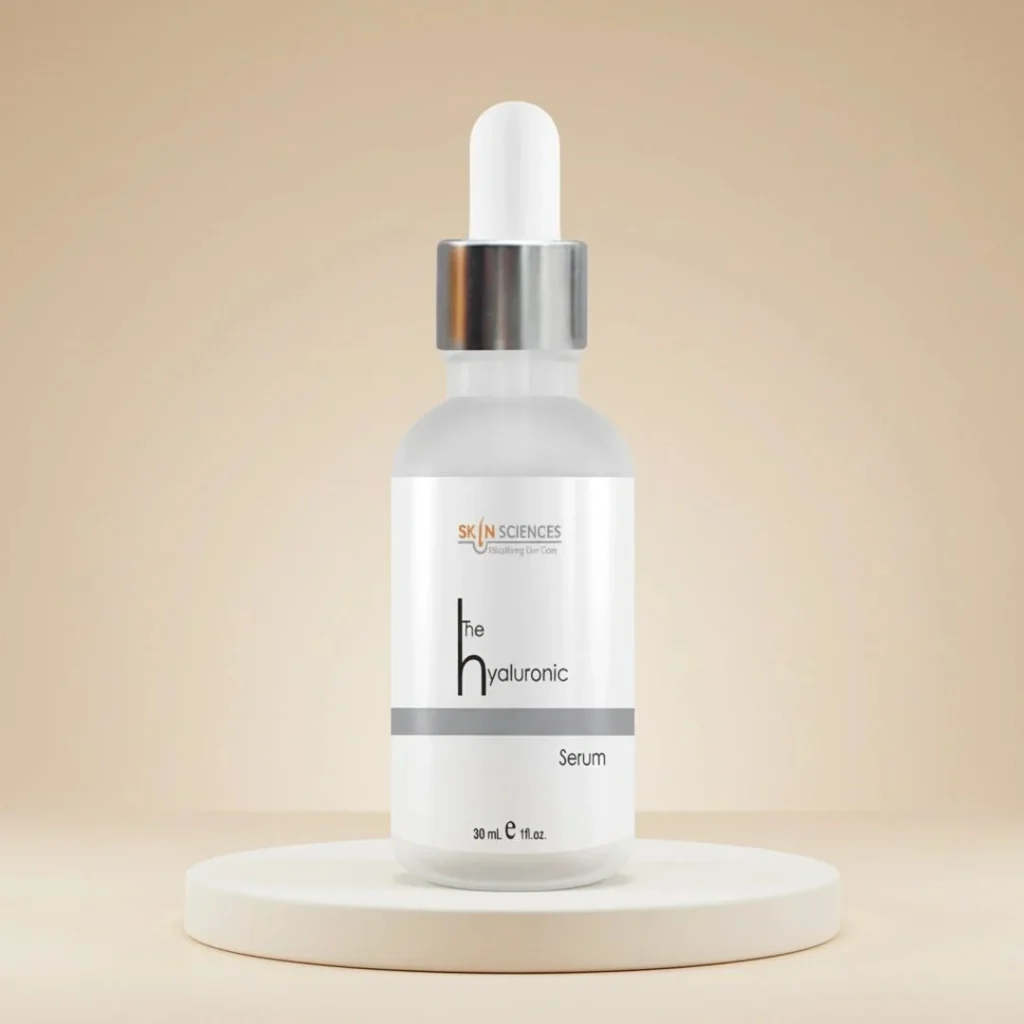
Skin Sciences offers a dedicated Hyaluronic Acid Serum, while several of its brightening products also contain sodium hyaluronate.
For someone searching for the best serum for radiant skin 2026, hydration should not be overlooked. Brightening actives and hydration often work better as complementary parts of a routine rather than competing goals.
How Skin Sciences Formulated Its Whitening & Glowing Serum
Skin Sciences approaches brightening through a range of targeted serums rather than relying on one universal formula.
Its current serum collection includes products based around vitamin C, niacinamide, alpha arbutin, tranexamic-acid-related brightening care and hyaluronic-acid hydration. The brand describes its products as developed by American Board Certified Dermatologists for Pakistani skin.
This targeted approach matters because pigmentation is not one single problem.
For example:
- Alpha arbutin may be selected when dark spots and uneven tone are the main concern.
- Vitamin C can provide antioxidant and brightening support.
- Niacinamide can support tone, barrier function and oil balance.
- TxA-focused products can be considered for pigmentation-focused routines.
- Hyaluronic acid is useful when dehydration contributes to a dull appearance.
Skin Sciences also provides a free consultation service in collaboration with Institute Cosmetique, where the brand says American Board Certified Dermatologists provide skin, hair and nail consultations.
Ingredient transparency matters
One important point for any skincare brand is to distinguish between what is publicly documented and what has been independently verified.
Skin Sciences publishes ingredient lists for its individual products, which is useful for consumers making ingredient-based decisions.
For a publication claiming specific concentrations, independent laboratory testing or certifications, those details should be added only when the corresponding documentation is available.
Best Serum by Skin Type and Concern
The best serum depends on what you are actually trying to improve.
For Oily Skin
Look for lightweight formulas that support an even complexion without adding unnecessary heaviness.
Potential ingredients:
- Niacinamide
- Vitamin C
- Alpha arbutin
- Lightweight humectants
A niacinamide-focused serum can be particularly practical when oiliness and uneven tone occur together.
For Dry Skin
Dryness can make skin look dull even when significant pigmentation is not present.
Consider formulas containing:
- Hyaluronic acid
- Sodium hyaluronate
- Glycerin
- Barrier-supportive ingredients
- Gentle brightening actives
Skin Sciences’ Vitamin C serum contains sodium hyaluronate and glycerin alongside its brightening ingredients.
For Sensitive Skin
Sensitive skin needs a slower approach.
Rather than choosing the strongest-looking product, prioritize:
- Fewer potentially irritating actives
- Hydration
- Barrier support
- Gradual introduction
- Patch testing
A skin whitening serum for sensitive skin should never be selected purely because the packaging promises rapid results.
If burning, persistent redness, swelling or significant irritation occurs, discontinue the product and seek professional advice.
For Acne-Prone Skin
Acne and pigmentation frequently overlap.
When acne marks remain after inflammation settles, a brightening serum may help improve their appearance over time. Niacinamide can be useful for this type of routine, while alpha arbutin may be considered when pigmentation is the primary concern.
Avoid aggressively layering multiple exfoliating and brightening products simply to accelerate results.
For Hyperpigmentation
If pigmentation is the main concern, consider ingredients with clinical research behind them, such as:
- Tranexamic acid
- Niacinamide
- Vitamin C
- Alpha arbutin
Persistent melasma, rapidly changing pigmentation or pigmentation associated with inflammation should be evaluated by a dermatologist rather than treated indefinitely with cosmetic products.
How to Use Whitening and Glowing Serums Correctly
Even the best serum for whitening and glowing skin cannot perform optimally if the routine is inconsistent or excessive.
Morning Routine
Step 1: Cleanse
Use a gentle cleanser appropriate for your skin type.
Step 2: Apply serum
Use the amount recommended on the product label.
Step 3: Moisturize
Apply moisturizer if needed.
Step 4: Sunscreen
Finish with broad-spectrum sunscreen.
This final step is particularly important for anyone treating pigmentation. UV exposure can worsen discoloration and work against your brightening routine.
Night Routine
- Cleanse.
- Apply the selected serum.
- Allow it to absorb.
- Apply moisturizer.
Do not automatically combine every active ingredient in one routine.
For example, if you are using vitamin C, retinoids, exfoliating acids and multiple pigment-targeting products, introducing everything simultaneously can increase irritation and make it difficult to determine which product is causing a reaction.
How often should you use a whitening serum?
That depends on the formulation.
Some Skin Sciences serum instructions recommend morning and evening use, while vitamin C guidance on the product page allows morning or evening use. Always follow the current instructions for the specific product you purchase.
How We Tested: What a Responsible 8–12 Week Evaluation Should Measure
A genuine “How We Tested” section should be based on documented testing rather than marketing assumptions.
For an 8–12 week evaluation, the appropriate assessment would include participants with different skin characteristics, such as:
- Oily skin
- Dry skin
- Combination skin
- Sensitive skin
- Acne-prone skin
- Visible hyperpigmentation
The evaluation should document baseline photographs under consistent lighting and assess:
- Overall tone evenness
- Appearance of dark spots
- Radiance
- Hydration
- Texture
- Irritation
- User-reported experience
A credible study should also document the number of participants, inclusion criteria, product concentration, application frequency, comparator or control, photographic protocol and statistical analysis.
Real Results: What Skin Sciences Users Experienced
Real-world skincare results vary considerably.
Skin Sciences publishes customer and dermatologist-review sections on several product pages, and its website describes visible improvements in concerns such as pigmentation, dullness and hydration.
However, customer testimonials are best treated as experience signals, not clinical proof.
A responsible description of results should therefore use language such as:
- “Some users report…”
- “Individual results vary.”
- “Visible improvement may take several weeks.”
- “Results depend on skin type, pigmentation severity and consistency.”
- “Sunscreen use can affect the outcome.”
The most realistic goal is brighter, more even-looking skin, rather than a permanent change in someone’s genetically determined skin colour.
Safety and Transparency: What to Look For (and Avoid) in Whitening Serums
Safety is particularly important in the Pakistani whitening market.
In October 2025, the Competition Commission of Pakistan announced a nationwide probe concerning whitening creams alleged to contain high levels of mercury and stated that some products had failed to disclose mercury on their ingredient labels.
Pakistan’s Drug Regulatory Authority also states that its role includes ensuring standards relating to the quality and safety of regulated health products and provides mechanisms for reporting suspected products.
Be cautious with products that promise:
- Instant whitening
- Permanent fairness
- Dramatic colour change within days
- “No side effects”
- Secret ingredients
- No ingredient list
- Unusually fast results
- Unlabelled imported creams
What about mercury, corticosteroids and hydroquinone?
These ingredients require particular care.
Mercury: Exposure to mercury can pose serious health risks. The CCP’s 2025 investigation specifically highlighted concerns about mercury-containing whitening products in Pakistan.
Corticosteroids: Potent topical corticosteroids can cause skin problems when used improperly or for prolonged periods, including thinning and other steroid-related changes. They should not be treated as ordinary cosmetic whitening ingredients.
Hydroquinone: Hydroquinone is a medically important depigmenting agent with clinical applications, but it should not be casually substituted into an unregulated cosmetic product. Dermatological supervision may be appropriate depending on the pigmentation disorder.
Skin Sciences safety disclosure
For publication, any statement that a specific Skin Sciences product is “free from mercury, hydroquinone and corticosteroids” should be supported by the brand’s current official formulation documentation or laboratory certificate.
The publicly accessible product pages reviewed for this article provide ingredient lists for products such as Alpha Arbutin, Vitamin C and TxA, but I could not independently verify a blanket laboratory certification covering every Skin Sciences serum.
That is preferable to making an unsupported absolute safety claim.
Best Serum for Whitening and Glowing Skin: Choosing by Concern
| Your Main Concern | Ingredients to Consider | Skin Sciences Option |
| Dark spots | Alpha arbutin, tranexamic acid, vitamin C | Arbiderm / TxA |
| Dull skin | Vitamin C, niacinamide | Vitabright C / Niaderm |
| Uneven tone | Niacinamide, alpha arbutin, vitamin C | Niaderm / Arbiderm / Vitabright C |
| Dehydrated dull skin | Hyaluronic acid, glycerin | Hyaluronic Acid Serum |
| Acne marks | Alpha arbutin, niacinamide | Arbiderm / Niaderm |
| Pigmentation-focused routine | Tranexamic acid, alpha arbutin | TxA / Arbiderm |
Skin Sciences’ current catalogue confirms these product categories and their stated positioning.
Frequently Asked Questions
What is the best serum for whitening and glowing skin?
The best serum depends on the cause of dullness or pigmentation. Niacinamide, vitamin C, alpha arbutin and tranexamic acid are commonly used brightening ingredients, while hyaluronic acid supports hydration. The right choice depends on skin type, concern and tolerance.
Can I use whitening serum every day?
Many brightening serums are designed for regular use, but frequency depends on the formula. Start according to the manufacturer’s instructions and introduce stronger actives gradually if your skin is sensitive.
Which serum is best for dark spots and glowing skin?
A serum containing alpha arbutin, niacinamide, vitamin C or tranexamic acid may be appropriate depending on the pigmentation. Persistent melasma or severe pigmentation should be assessed by a dermatologist.
Is vitamin C serum good for whitening?
Vitamin C can help improve the appearance of pigmentation and dullness. Clinical evidence supports topical vitamin C for pigmentation-related concerns, although results depend on formulation, stability and consistent use.
Is niacinamide good for glowing skin?
Yes. Niacinamide can support the skin barrier and has clinical evidence for reducing the appearance of hyperpigmentation and improving skin lightness.
How long does a brightening serum take to work?
Some hydration-related improvements can appear relatively quickly, but pigmentation usually requires longer and more consistent use. Depending on the ingredient and skin concern, meaningful changes may take several weeks to a few months.
Can serum permanently whiten my skin?
No cosmetic serum should promise permanent whitening or a permanent change to your natural skin colour. A safer goal is to reduce excess pigmentation, improve uneven tone and restore a healthier-looking glow.
Final Verdict: Is Skin Sciences the Best Serum for Your Whitening and Glowing Goals?
If your goal is brighter, more even-looking and naturally radiant skin, the best serum is one chosen according to your pigmentation concern, skin type and tolerance not simply the product making the strongest whitening promise.
Skin Sciences provides a range of targeted options, including Vitabright C, Niaderm, Arbiderm Alpha Arbutin, TxA Serum and Hyaluronic Acid Serum, allowing consumers to match ingredients with specific concerns.
For dark spots and uneven tone, ingredients such as alpha arbutin, niacinamide, vitamin C and tranexamic acid have varying levels of clinical evidence. For dullness associated with dehydration, hyaluronic acid can improve the skin’s hydrated, plump appearance.
The most important part of the routine, however, is not the promise of “whitening.” It is consistent, evidence-informed skincare plus daily sun protection.
And in Pakistan’s whitening market, transparency matters. Consumers should avoid products with undisclosed ingredients or unrealistic instant-whitening promises and should pay particular attention to regulatory and safety information.
Ultimately, the best serum for whitening and glowing skin is the one that helps address your actual pigmentation or dullness concern while maintaining skin health, with realistic expectations and appropriate safety precautions.