Gastric Band Surgery
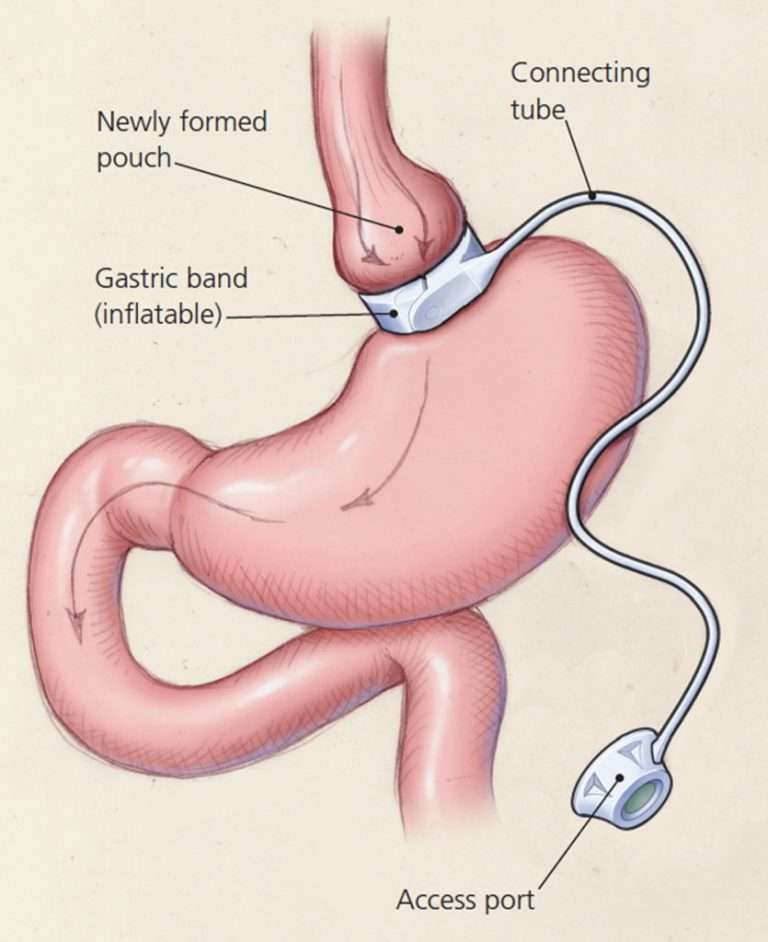
In gastric band surgery, your surgeon puts a band filled with saline solution around the upper part of your stomach. This creates a small pouch with a narrow opening into the lower part of your stomach. You will feel full after eating just a small amount of food.
To qualify for gastric band surgery, you must be 100 pounds or more above your ideal weight and have a body mass index (BMI) of 40 or higher. If you suffer from other complications of obesity, you may be a candidate for gastric band surgery with a BMI of 35 or higher. People with higher BMIs may want to consider more aggressive bariatric surgeries, such as sleeve gastrectomy or Roux-en-Y gastric bypass.
Most candidates for gastric band surgery also demonstrate a five-year history of morbid obesity.
Your insurance company requires that you meet certain guidelines, such as taking part in a supervised weight loss program without success and undergoing a psychological evaluation to make sure you are prepared to make the lifestyle changes required after surgery.
Before you experience gastric band surgery you must make many adjustments in your eating choices and exercise habits well in advance of the procedure. The surgery will not work if you cannot restrict the amount of solid food you eat.
At Indiana University Health, our affiliation with the IU School of Medicine Division of General Surgery keeps us informed about the new bariatric surgical techniques and the newest research into surgery’s impact on obesity and related conditions.